
Wade Trim: 100 Years of Getting it Right

There is no photograph of the first day.
That’s how it often goes with the things that end up mattering most. In 1926, a civil engineer named Edwin Orr opened a business designing sewers and roads for local communities. No ribbon cutting. No press release. Just a man with a drafting table and the conviction that a town deserved a road that drained properly and a sewer that held.
A hundred years later, Wade Trim is still doing that work. The tools may have changed, but the idea hasn’t.
If you want to understand this century-old company, don’t start with the balance sheet. Start with two young men who happened to work in the same Dearborn, Michigan, office. Bob Wade came in as a drafter and rodman in the early 1950s, working while he attended college. Don Trim came onboard in 1964 as a professional engineer. They liked each other. That’s the whole beginning. No grand strategy or venture capital. Just two men who decided they would rather solve problems together than apart.
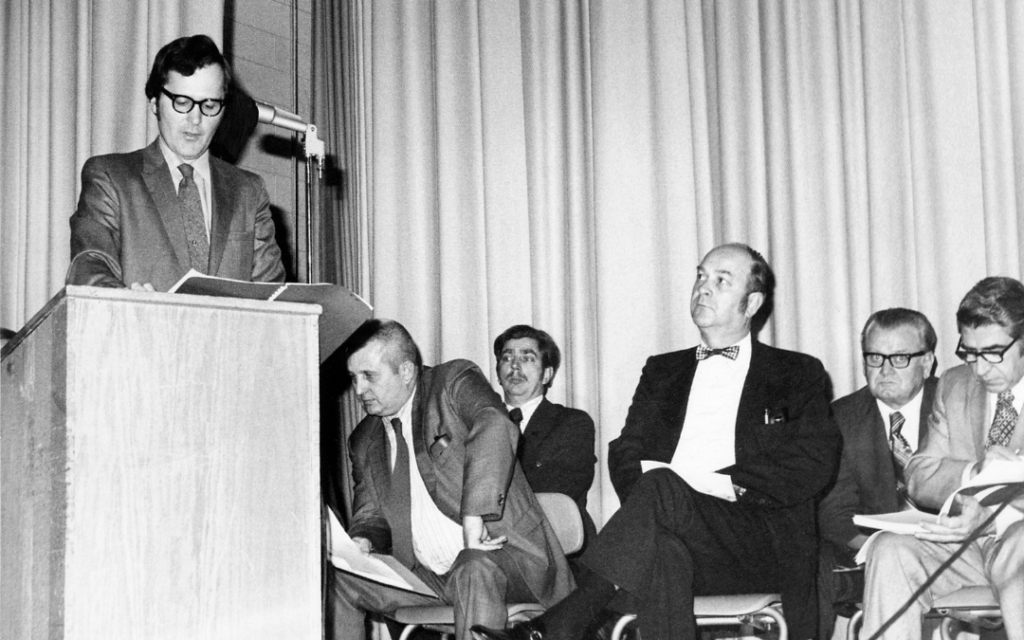
When Orr began an early retirement, Bob and Don started running things. In 1966, they bought the company outright: 22 employees, a handful of clients, and a lease on the office space. Within two years, the sign on the door changed to Wade, Trim & Associates. The clients didn’t blink. They already knew Bob and Don, and they liked the work.
They were different men, which is probably why it worked. Bob saw what technology could do, pushing the firm toward computer-aided design at a time when plenty of engineers still thought a pencil was sufficient. Don was interested in people. He believed the best projects came out of collaboration, from bringing every affected agency and constituency to the table. He advanced that argument through programs and publications for ACEC, making the case that consulting engineers ought to be viewed as trusted advisors rather than vendors. He spearheaded ACEC’s involvement in the adoption of design/build legislation by the U.S. Congress in 1997 and served as an ACEC Chairman and Fellow.
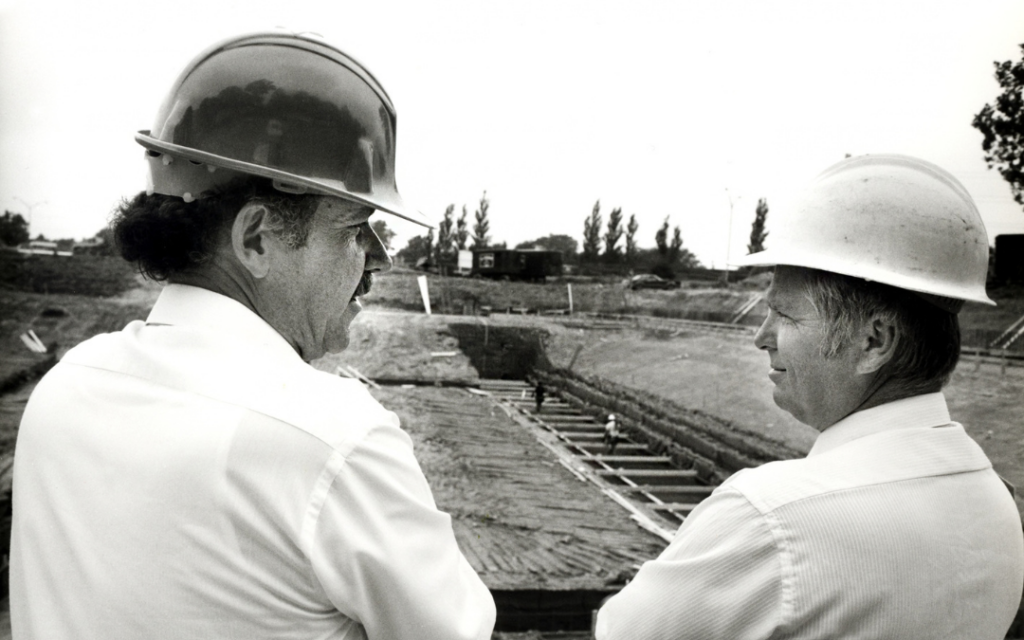
Growth fueled by computation and collaboration. This is the Wade Trim formula that has stood the test of time.
Consider the pollution impacts of wet weather.
Early work on local sanitary sewer and stormwater systems in the Detroit area gave the firm a solid understanding of the performance and operation of sewer systems. As work expanded into regional projects and environmental regulations increased, older, urban communities in Michigan needed to control combined sewer overflow (CSO) during wet weather to protect public health and water quality.
Wade Trim worked with the city of Detroit to develop one of the earliest and most comprehensive Long Term CSO Control Plans in the country. The three-year process involved 300+ Detroit staff, 11 consultants, and 77 wholesale customers. The plan addressed annual discharges of 20 billion gallons of CSO through 78 outfalls on the Detroit and Rouge Rivers.
Design of unique infrastructure facilities for wet weather overflow control followed. Six CSO retention treatment basins were designed for Detroit and Wayne County and were used to evaluate the effectiveness of different treatment methods.
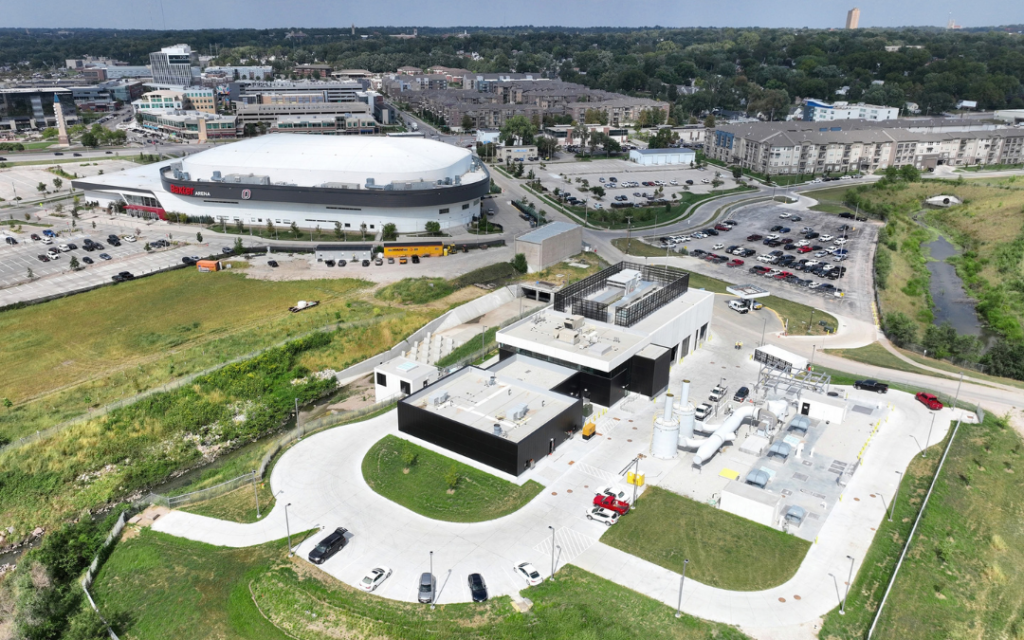
This pioneering wet weather management work became a springboard to major wet weather pollution control projects throughout the Midwest and Rust Belt. Wade Trim has designed wet weather projects in Cleveland, Cincinnati, Omaha, Pittsburgh, and New York, continuing to advance technology used to address problems that contribute to pollution in our rivers and streams.
Another theme in Wade Trim’s longevity is minimizing community impacts during infrastructure work.

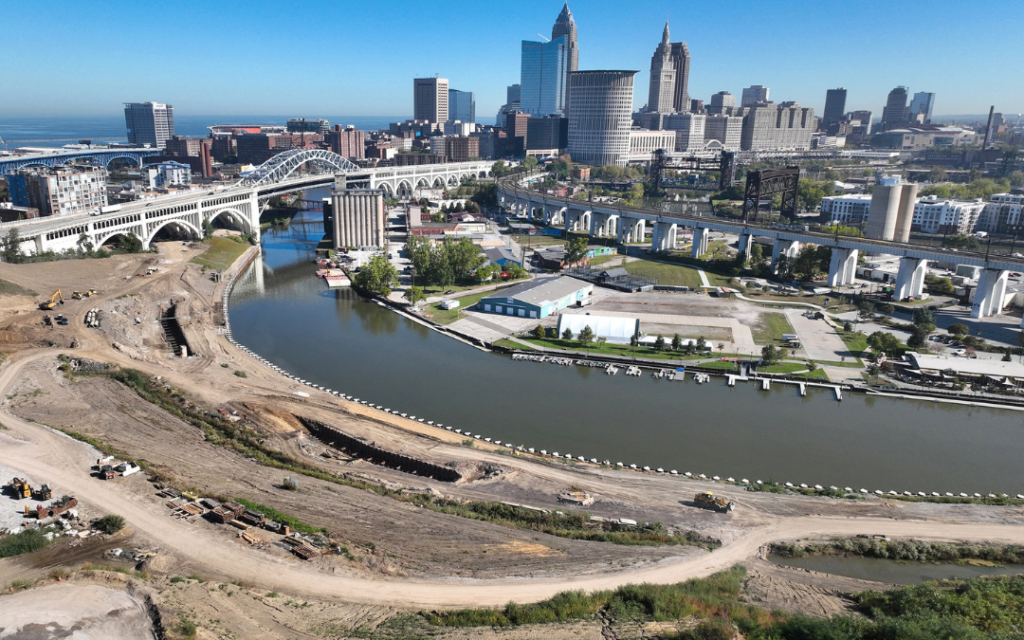
In Tampa, designing the replacement of 2.3 miles of force main under Harbour Island meant eight trenchless installations and a 3,200-foot microtunnel beneath the Ybor Turning Basin, the longest contiguous 78-inch steel casing in the Western Hemisphere, all chosen specifically to shorten the route and spare residents, businesses, and local tourism. Construction services are also critical. In Atlanta, nearly five miles of outfall sewer in the Sugar Creek Basin was replaced on a fast-tracked, federally mandated schedule. In Cleveland, the firm’s stabilization efforts kept the Irishtown Bend hillside out of the Cuyahoga shipping channel.
“Infrastructure design has always been a mainstay at Wade Trim,” said President, CEO, and Chairman Andy McCune. It is the connective tissue across every market the firm serves.
Community shows up inside the organization, too.
Bob and Don stepped away from managing the firm in the 1990s, but it’s who they left it to that is the center of this entire story. They left the company to the employees. Culture is not just a poster in the breakroom here. Wade Trim has been 100 percent employee-owned from the beginning. Today, the ownership program includes 500 stockholders with an average age of 40 years. Of the employees eligible to buy in, 85 percent do. The firm’s view is clear: an ownership mindset changes how people approach the work, how they collaborate, and what they’re willing to do to get a client the best solution.
The numbers tell a compelling story. Voluntary turnover sits at 7.8 percent. That figure alone is a statement. So is the 84 percent offer acceptance rate, which happens because the firm spends real time before an offer is ever extended. They are not just looking to fill seats. Their goal is to hire long-term employees.
Longevity is not an accident of the market. It’s the sum of the people who stayed. Today, that’s more than 850 people across 23 offices in nine states, covering engineering, planning, landscape architecture, surveying, and construction services.
Building For the Future
“Only one half of one percent of all companies ever founded get to be 100 years old,” said McCune. Which raises the question every century-old firm eventually must answer: how do you hand over the critical, but perishable, institutional knowledge that is the lifeblood of any organization? In the Age of AI, it’s one of the most important things for every firm to remember: software can be bought, but judgment must be taught. And Wade Trim has done that informally from its inception, all the way up to the C-suite. They then took it a step further and made it structural.
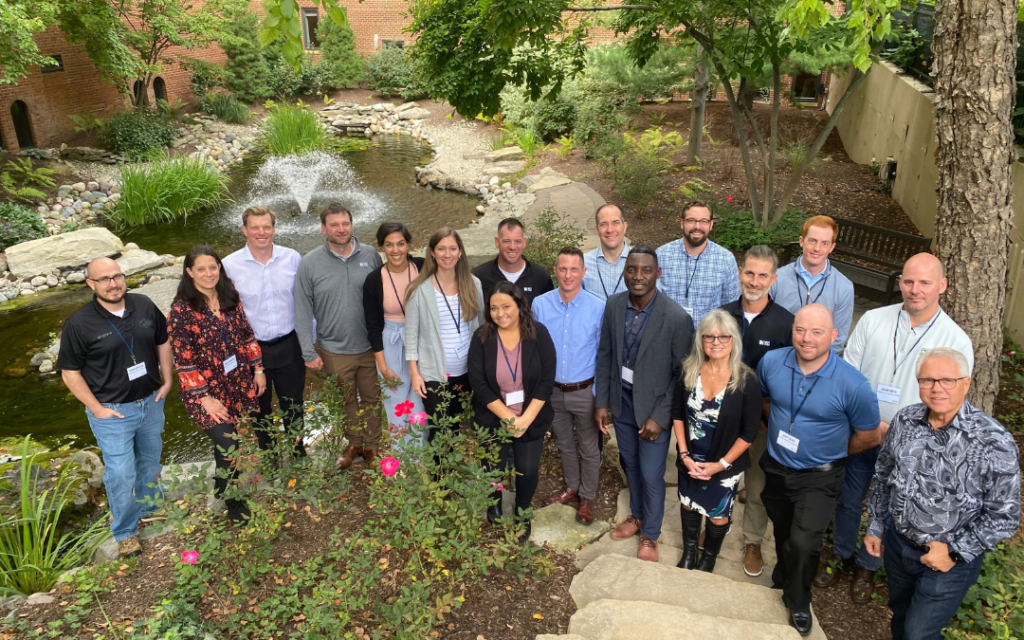
The Leadership Academy was launched in 2016 as an incubator for future firm leaders; it has graduated nearly 100 employees. A formal mentoring program followed in 2020, so careers grow through professional relationships rather than proximity and luck. In 2025, Advancing Leaders was built on top of the Academy to focus on strategy, leadership, and management of the company itself. These programs are integral to Wade Trim’s succession planning; third-party career planning and coaching resources are brought in to further support participants.
“The Leadership Academy is a direct reflection of our culture and our commitment to growing leaders from within,” said Positioning Manager Courtney Berning. “We’re being intentional about preparing the next generation of leaders, rather than reacting to when leadership transitions happen.”
This is what it looks like to build a bench rather than shop for one. And in an industry staring at a knowledge cliff, it’s arguably the most valuable asset on the books. Don understood the pipeline problem before it was a headline, driving Wade Trim’s scholarships and internships. It was the same instinct pointed one generation further out, toward kids who haven’t yet decided whether engineering is for them.
“The leadership team wants staff to feel they have opportunities in their careers to advance and take on different roles,” said McCune, whose own career with the firm is a compelling proof point. He joined Wade Trim in 1987 as a young engineer fresh out of Michigan Technological University. “In my first year here,” he said, “I was out in the field doing inspection work, but I eventually worked my way up to CEO. If you show the interest, if you show the drive, you can be CEO of this company.”
To Whom Much is Given
There is one more measure of a workforce, and it isn’t billable.
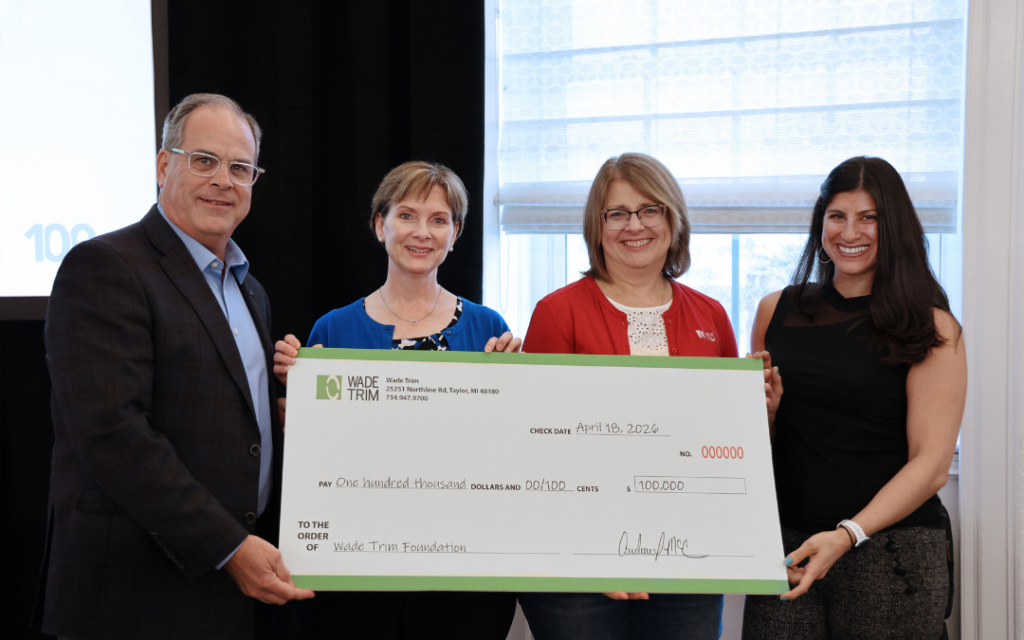
The Wade Trim Foundation was established in 2023 to improve the environment, communities, and quality of life through innovative infrastructure investment where employees live and work. Annual grants are awarded to nonprofits who best align with the Foundation’s mission. For the centennial, the firm put in $100,000 as a gesture of gratitude to their clients, enabling the award of two additional $7,500 grants. To date, 22 grants have been awarded totaling $140,000.
Therein lies one of the secrets to Wade Trim’s retention stats and to its enduring success, and it’s really no secret at all. People tend to stay at places that do that sort of thing.
A hundred years is a long time for anything to last, and longer still for a set of core values. But that is really what Wade Trim has been carrying all this time: basic beliefs about how people ought to treat one another, written down and then, more remarkably, kept. They also have made a Wade Trim Promise to employees and clients that they will remain true to their culture and core values as they grow.
When the firm that would become Wade Trim opened in 1926, plans were drawn in ink and calculations were done on a slide rule. Since then: the interstates, the Clean Water Act, CAD, now AI. The problems changed, too, from building infrastructure to keeping it alive, and from expansion to resilience. As those shifts thinned the field, Wade Trim made every turn.
“We have built an amazing company,” said McCune. “Our journey reflects generations of employees and clients who worked together, adapting to major changes in the economy, markets, and technology.”


