ACEC 2026 Annual Convention & Legislative Summit Highlights

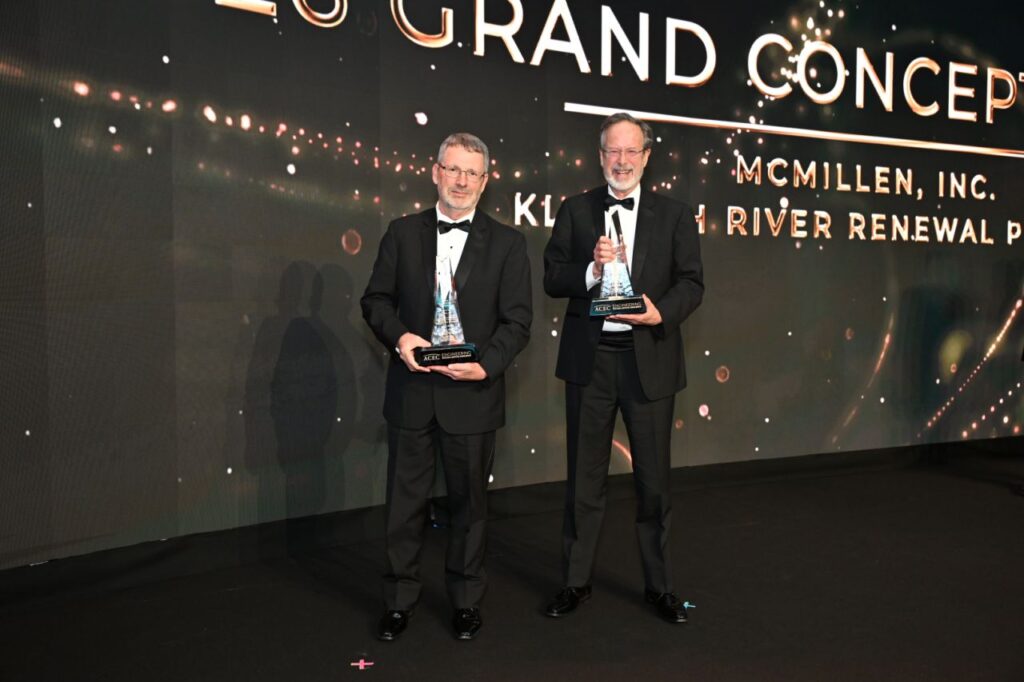
More than 1,000 ACEC members convened in Washington, D.C., in May for the 2026 Annual Convention and Legislative Summit in Washington, D.C. The program featured cutting-edge business education sessions, extensive networking opportunities, and a distinguished lineup of Washington insiders and nationally renowned speakers. More than 600 members and special guests attended the 2026 Engineering Excellence Awards Gala, where the Klamath River Renewal Project by McMillen, Inc. won the prestigious Grand Conceptor Award—recognizing the world’s largest dam removal and river restoration effort. See more Annual Convention highlights below:
Board Gathers in Washington, Seats New Chair
During her Board of Directors address, ACEC President and CEO Linda Bauer Darr discussed the current political state of play, with a volatile economy, rising oil prices, and overseas conflict all poised to play a role in the upcoming midterms. Add to that a legislative calendar “bursting at the seams with must-pass legislation,” and you have the makings of congressional paralysis.
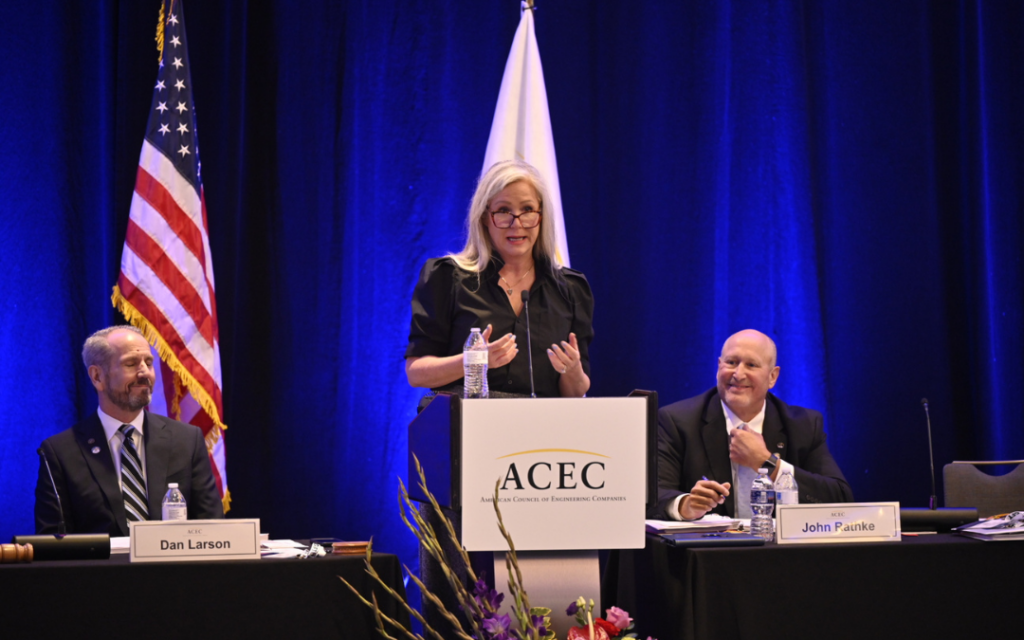
But, Darr said, there is opportunity in that volatility, particularly around the surface transportation bill. With IIJA set to expire September 30, Congress is set to debate what comes next. In six months, Americans will head to the polls to vote on every congressional seat and 35 Senate seats. In a deeply divided political environment, infrastructure is politically durable. “Every member of Congress wants to go home with an infrastructure win,” Darr said. “Our message of jobs, safe roads, and clean water is a message that wins campaigns.”
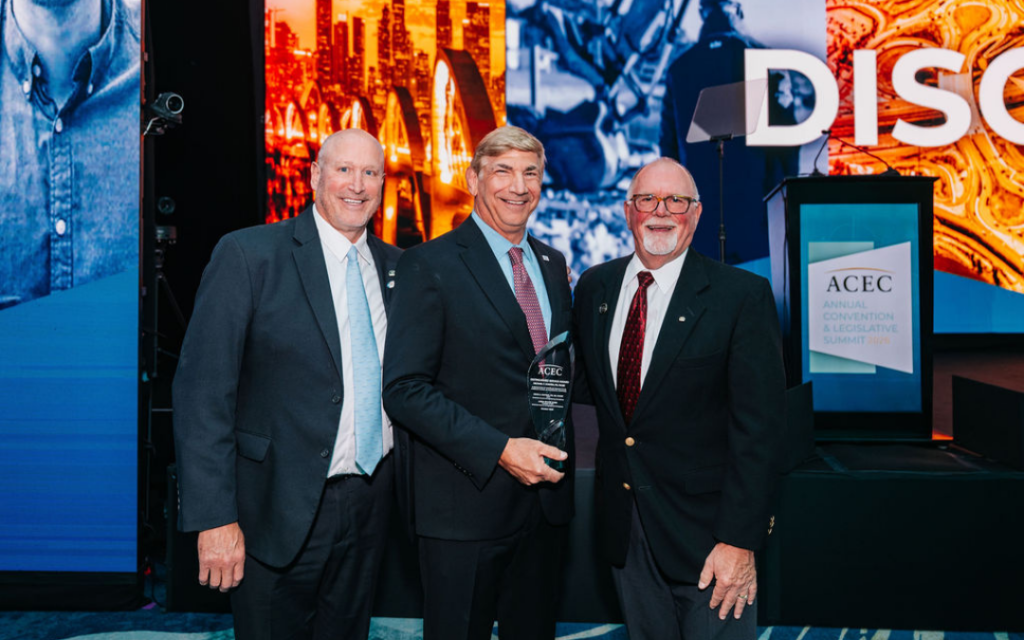
With the board meeting marking the end of John Rathke’s term as Board Chair, Darr offered words of appreciation for his leadership—and friendship—during the last year. She praised him as a generous and supportive leader who brought clarity and calm to every project and process, but who also was “genuinely fun to work with.” Rathke, she said, was a true partner. “Our Council is stronger for the year he gave us.”
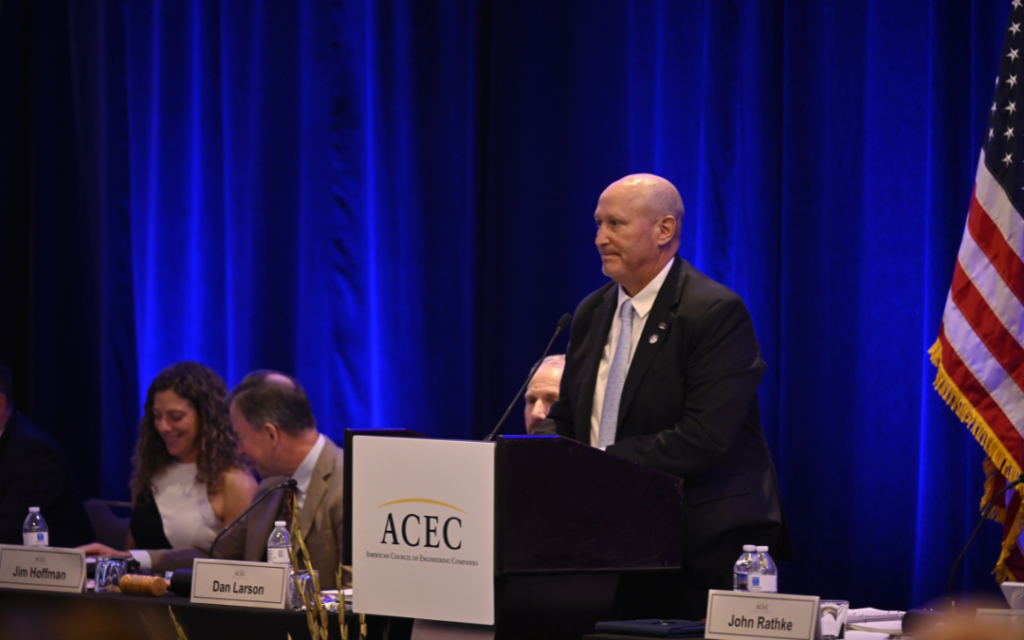
In his valedictory remarks, Rathke thanked the ACEC team, and emphasized how his tenure as chair was rewarding, challenging, and just plain fun. He spoke of expanding ACEC’s member ranks, not just in numbers but in access. “We often talk about giving everyone a seat at the table,” Rathke said. “But you can’t just seat someone and call it hospitality.” He closed his remarks as he started them: with gratitude. “Serving as ACEC Chair has been one of the great privileges of my professional life,” he said. “Thank you for the year and thank you for the trust.”
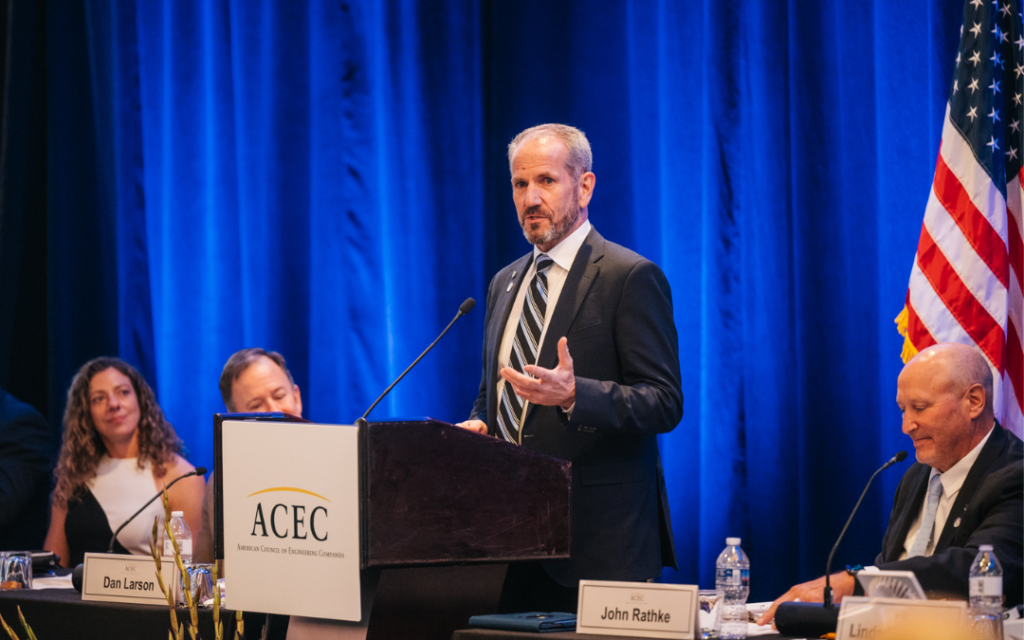
The torch (and gavel) was then passed to new ACEC Chair Dan Larson, who used his remarks to outline some of his priorities for the coming year. Larson emphasized that he inherits a Council that is strong, agile, and built to win—and he was quick to praise his predecessors for their leadership. He discussed the proposed refinements to the strategic plan (approved later in the meeting), which he said are responses to the priorities and concerns of our member firms. “[The strategic plan] looks at a technology landscape accelerating past the workforce trained to manage it, and it looks at talent gaps widening faster than pipelines can fill them,” Larson said. The challenges of our time, he said, call for a prepared and unified ACEC. “The stakes are too high for anything less than our full collective force. We are stronger together.
“That’s not sentiment. It’s strategy.”
Annual Convention Kick Off: The Essentiality of Engineering
ACEC President and CEO Linda Bauer Darr began her opening general session remarks by asking attendees to turn their attention to the water pitchers sitting in the middle of every table in the Grand Hyatt Washington’s Independence Ballroom. Noting the clarity and safety of the water in each pitcher, she then referenced a “60 Minutes” segment about McDowell County, West Virginia—a town five hours from our nation’s capital in which the water is too dangerously polluted to consume.
That story formed the framework of Darr’s remarks, which focused on the role of engineers in bridging the innovative and the essential. “We talk about the digital divide,” she said. “But what about the water divide? The health divide?” In a moment marked by deep political division and dazzling technological advances, one thing that should unite us is our commitment to ensuring universal access to the basics of life. Darr shared a conversation she had recently with a prominent Senate leader. Appearing tired and frustrated, this lawmaker confided that he wasn’t cut out for “this climate of performative politics.” He longed to return to the days of legislating around things that matter — “the kinds of things that WE do,” Darr said.
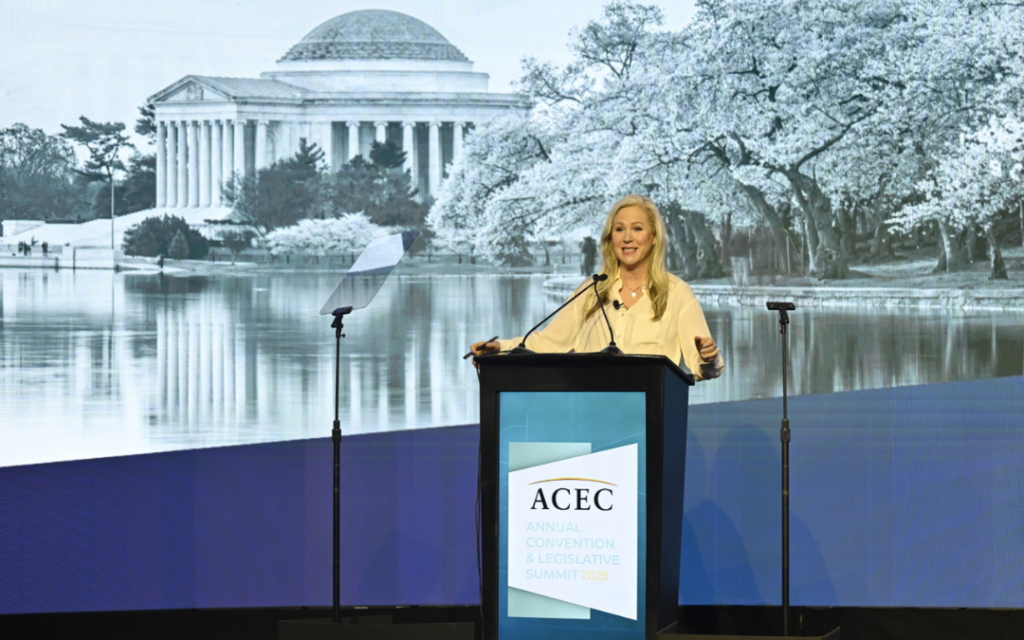
Despite a political climate marked by contention and conflict, there are real opportunities to make the case for the essentiality of engineering. McDowell County, WV is not the outlier we all wish it were. It’s a story one can find in every state across our country—a story of social compacts being broken and citizens suffering because of it. And that, Darr urged attendees, is what our citizen lobbyists must emphasize to our lawmakers and their staff this week. “The dysfunction of this moment,” she said, “is not an excuse to wait this out. Every moment spent on performance rather than purpose is a moment we don’t get back.”
With Congress set to mark up a new surface transportation bill—and with water legislation not far behind—the time has never been better to drive home the importance of what we do. As Darr said in her remarks to the Board: “Infrastructure is politically durable.” Six months out from a pivotal midterm election, safe roads and clean water should be an easy “yes” for lawmakers.
But leave politics out of it for a moment because there is so much more at stake. From its earliest days, engineering, Darr said, has always been a civic act. “The bridges, the railroads, the water systems—these weren’t just engineering feats. They’re declarations that distance, danger, and hardships were problems to be solved, not conditions to be accepted.”
“Engineering didn’t just build the modern world,” she said. “It dignified it.”
Author & Historian Jon Meacham Delivers General Session Keynote
In a moment marked by conflict, there is value in perspective that goes beyond the latest trending outrage on X or the most recent viral soundbite on CNN. During his general session address, author Jon Meacham offered some of that historical perspective, discussing what he called this “difficult moment” in the life of not just our country, but of the Western World. It’s a moment where political opposites are seen as enemies, not rivals. That is, Meacham stated, an important difference. “Rivals must be beaten. But enemies must be destroyed.” This state of politics as total war, in which every hour is existential conflict, is a new development—and it is one that bodes ill for our nation as political polarization seeps into our everyday life.
Love him or hate him, Meacham said, the last decade has been The Age of Trump. Asked about the 2028 presidential election, Meacham referenced the “conventional wisdom” on the likely GOP nominee but hedged on who he thought the Democrats might tap. The larger question that will drive the ’28 election, he said, is whether The Age of Trump becomes The Age of Trumpism. In other words, can a candidate without Donald Trump’s preternatural political talent pick up the MAGA mantle? Donald Trump, Meacham said, was chosen by the American electorate not just to send a message to Washington, but to send a messenger.
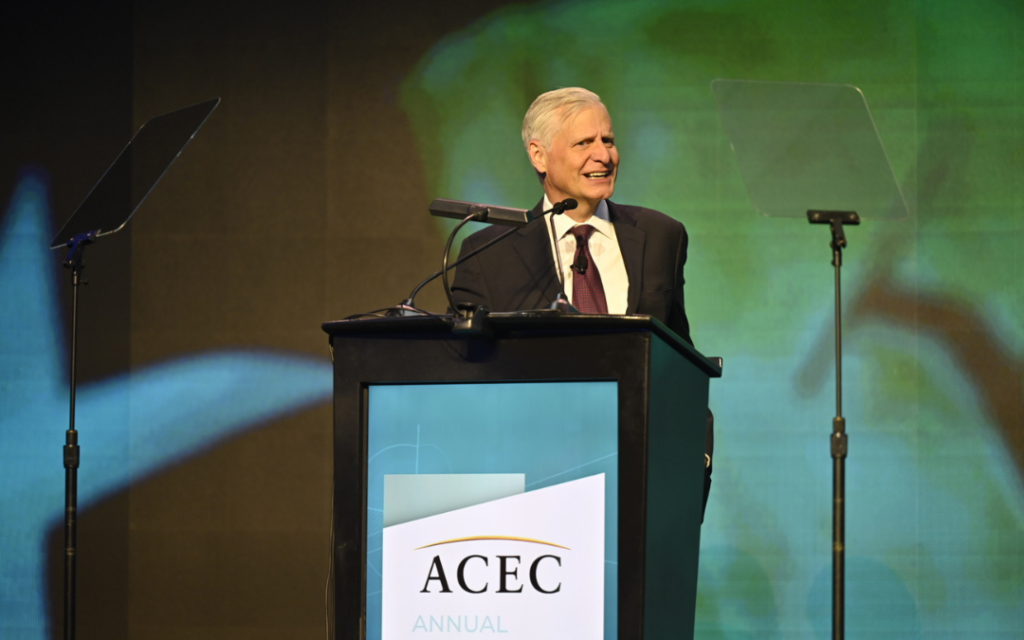
And what of Americans who are fatigued by the constant onslaught of negativity and tumult? Meacham offered a simple solution: turn the TV off and put the phone down. A media culture that monetizes division has an interest in fomenting it. Sober, cordial debates about policy don’t drive clicks and engagement. “Cable news is driving decisions in ways that aren’t healthy,” Meacham said. “Don’t let any X feed or cable network tell you what to think.” He went on to say that we as a nation are choosing to be this divided—and that politicians act on incentive. He drew a hearty laugh from attendees when he called for something tantamount to “partisan Ozempic,” saying he wished there were some way to take a shot to become a little less partisan.
Meacham noted that engineers are order among chaos and that there is reason to keep the faith and not despair in this moment. He closed his remarks with a famous call to arms by Faber College’s Bluto Blutarsky, reminding us all that it wasn’t over when the Germans bombed Pearl Harbor.
Miles to Go: Surface Transportation Bill Takes Center Stage
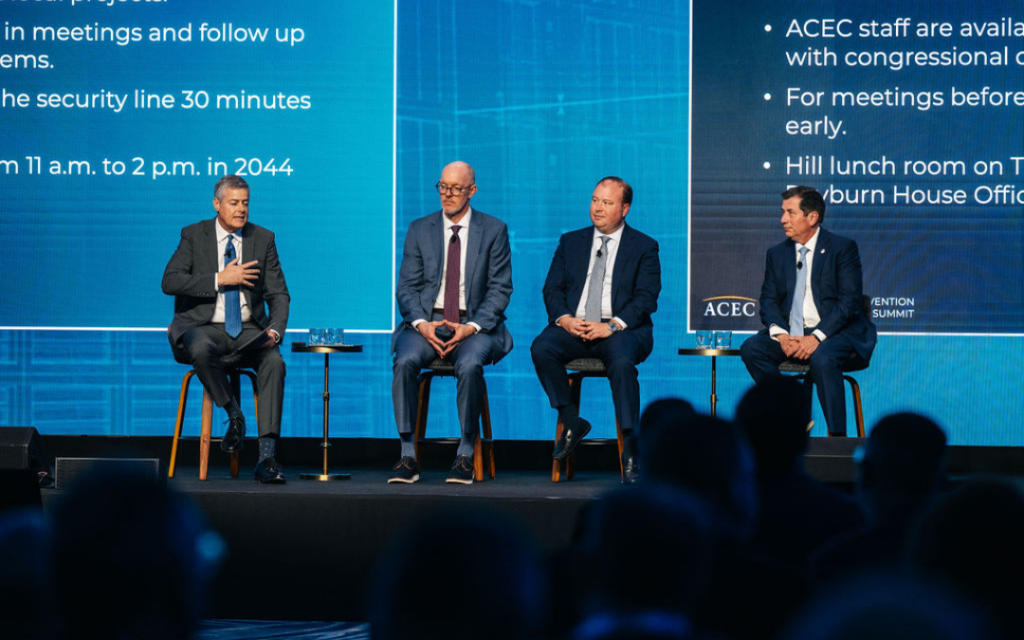
For our industry, the surface transportation bill is the most important and consequential piece of legislation currently under debate in Congress. It’s a test of whether congressional leaders can still cut the kind of old-fashioned political deal that moves money and votes to get important things accomplished. On the eve of ACEC’s citizen lobbyists heading to Capitol Hill to discuss the importance of passing a robust surface transportation package, convention attendees had the opportunity to get a bit of insight and intelligence into the inner workings of the debate from four Washington insiders.
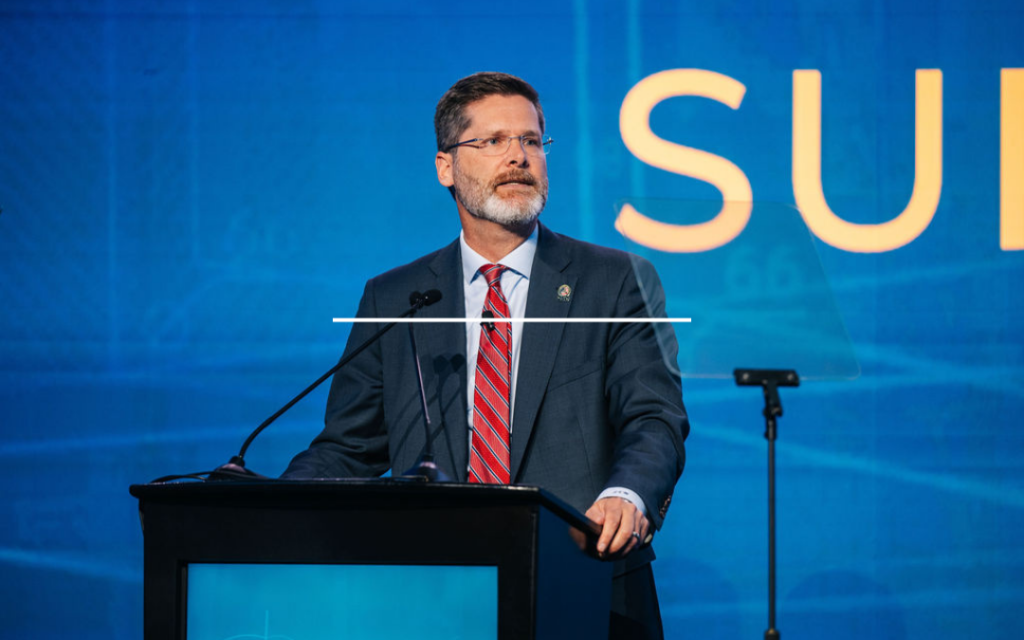
Federal Highway Administrator Sean McMaster kicked off the afternoon briefing—and he began his remarks with a declaration: “We are getting America building again.” He touted the Trump administration’s efforts to streamline project delivery and reform environmental review to facilitate building “big, beautiful things that last.” McMaster also stressed the White House’s commitment to partnering with the private sector to build a robust transportation system that is “the envy of the world.” On the surface transportation bill, he acknowledged the need for long-term, predictable funding and assured attendees that the White House knows how important this is. “You can’t grow at the speed of Trump without transportation.” McMaster noted that the nation’s 250th birthday coincides with the 70th anniversary of the American highway system. “It’s a great opportunity to reflect on how far we’ve come,” he said. “I can’t wait to see what the next 250 years will hold.”
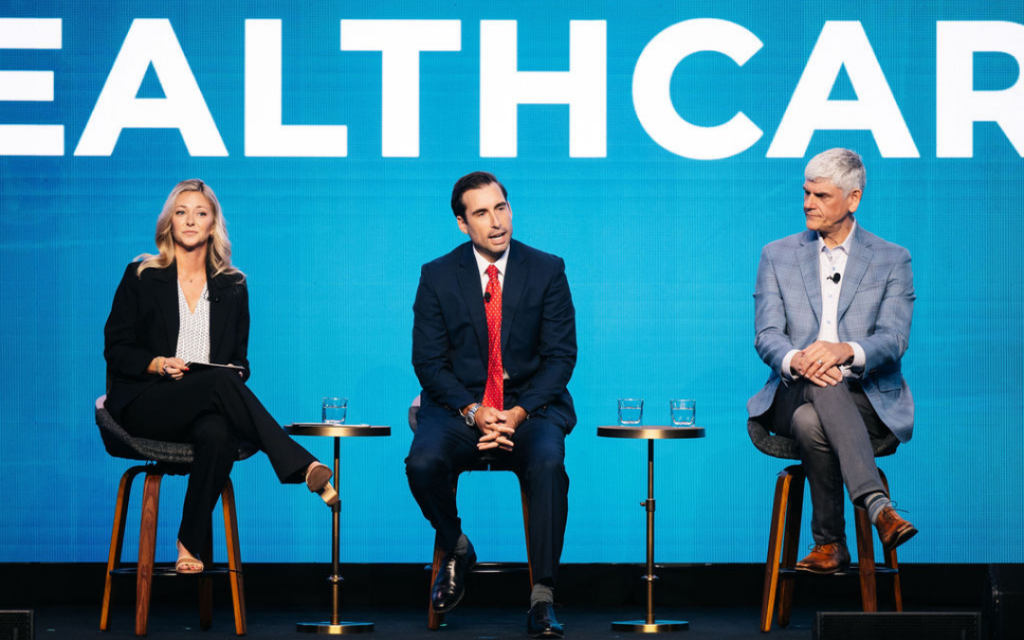
The latter half of the afternoon session featured a panel discussion with Politico Senior Political Analyst Jonathan Martin and two former chairs of the House Transportation and Infrastructure Committee, Oregon Democrat Peter DeFazio and Pennsylvania Republican Bill Shuster. Before welcoming the former members, Martin spent a few moments discussing the political lay of the land. Echoing earlier remarks by author Jon Meacham, Martin concurred that we are living in the Decade of Trump. “He controls both parties,” he said. “He is the dominant force in the Republican Party, and the Democrats are organized around opposing him.” President Trump has changed the political game, but Martin argued that the real cultural sea change began with the 2006 invention of the iPhone and the concurrent explosion of social media. Now, we can fight our political battles in real time, with real-world implications. Martin joked that even holidays aren’t immune. “It used to be Thanksgiving meant eating some turkey with family and watching the Lions lose to someone,” he said. “Now you have to be afraid that your MAGA uncle and woke niece are going to be throwing rolls at each other.”
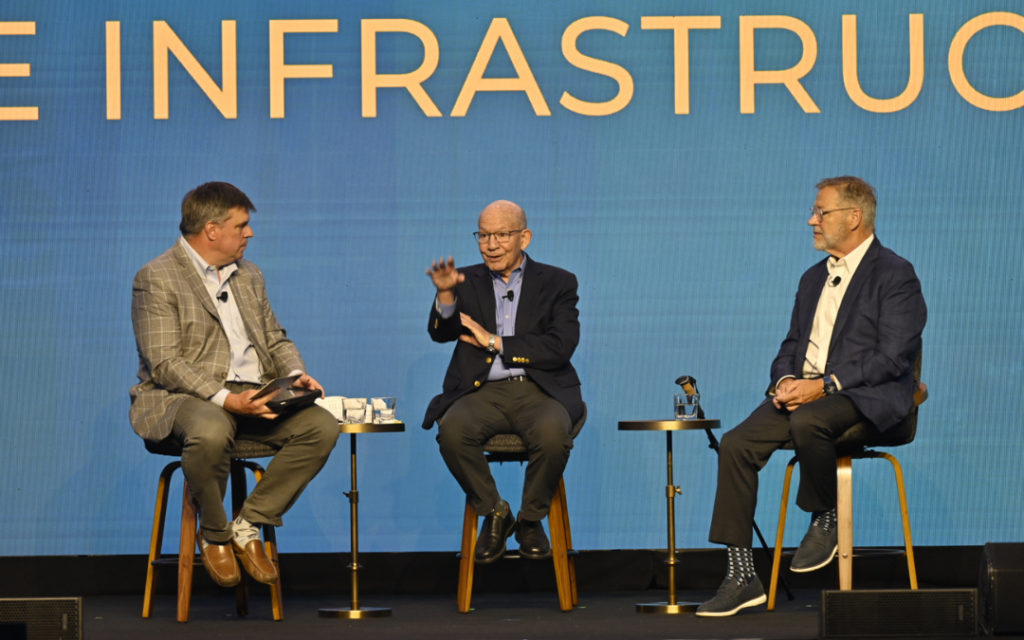
Martin then welcomed to the stage DeFazio and Shuster, introducing them as two of the most consequential leaders of the Transportation Committee with a shared record of getting infrastructure done. Both members agreed that transportation is a win for everyone in an election year—the closest thing we may ever get to a benign, universally agreed-upon issue in a deeply divided Congress. “Transportation is not partisan,” said Shuster. DeFazio agreed but noted the Senate could (and likely would) prove a hurdle. “We’re House members. We’re lawmakers. The Senate is something else,” he joked.
In advance of ACEC’s Hill visits, both members were quick to offer tips on how to best reach members. “Talk about how the bill affects your firm and how it affects jobs,” said DeFazio. “Members want to hear how it affects their districts.” Shuster concurred. “Putting a name and a face with an issue is key. Get in the ear of staff and talk about what’s at stake.”
The members also weighed in on the current state of politics. The conventional wisdom of the day was that the contentiousness was ushered in by a clash between Donald Trump and a political establishment chafing against his influence. But Shuster argued that this climate of continuous conflict began in 1994 with Newt Gingrich’s Contract with America. “Democrats had been in power 40 years,” he said. “Republicans won control—and that’s where the permanent war began.”
ACEC Unveils Pipeline Project at Convention—An ACEC Workforce Development Initiative
America is not producing enough engineers. Even as infrastructure investment surges, enrollment and completion rates in engineering programs are declining—and the gap is widening. The Pipeline Project is one opportunity for ACEC to address this issue now.
Launched at this year’s Annual Convention, this two-year national initiative (2026–2028) is led by the ACEC Workforce Development Committee and built on a proven model: a partnership with the ACE Mentor Program of America, connecting high school students with real-world engineering professionals through structured mentorship.
How can your firm or state Member Organization get involved? Whether a small or large organization, there is room for you to engage in this important endeavor:
- Volunteer mentors—commit engineers from your firm to serve as ACE Mentor volunteers in your community
- Chapter support—help open or sustain ACE Mentor chapters in underserved areas near your offices
- Leadership role—champion the initiative within your ACEC chapter and recruit additional firms across your region
The lift is low. ACE Mentor’s curriculum, tools, and chapter infrastructure are already in place—your firm simply plugs in. Participation is flexible for firms of any size, from a single committed volunteer to a full regional leadership role.
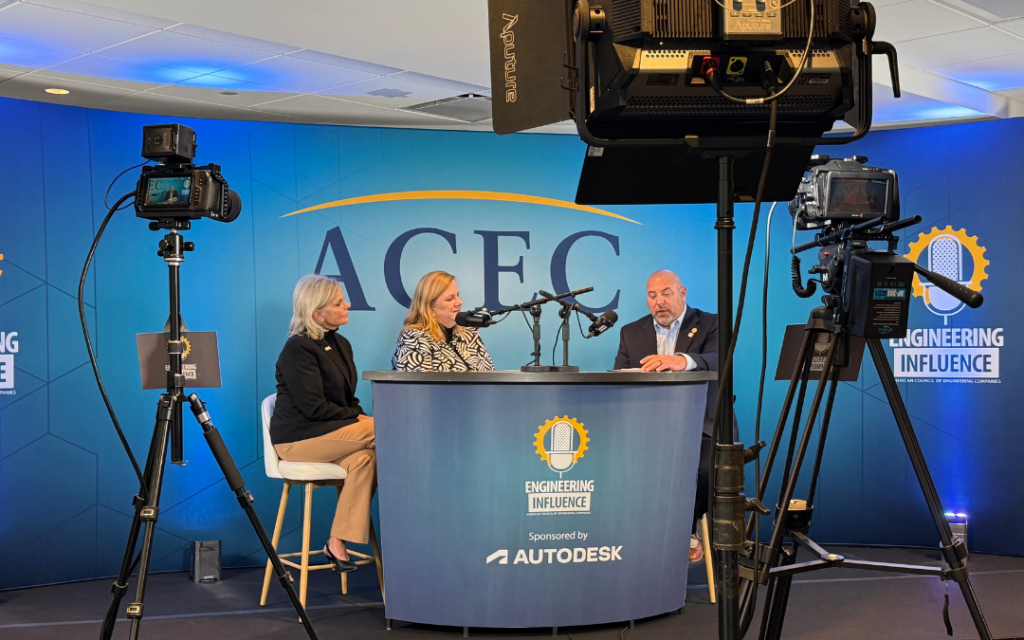
We already have ACEC members and state Member Organizations committed and ready to partner. Early adopters will be featured and credited as the firms that launched this national effort—and tracked on the Pipeline Tracker.
High school is the inflection point. Students who are mentored are significantly more likely to enter and complete engineering careers. One engineer. One changed career path. Are you in? Scan the above QR code to get involved and learn more about the Pipeline Project here.
Technology Leaders Explore Digital Technologies in the AEC Industry
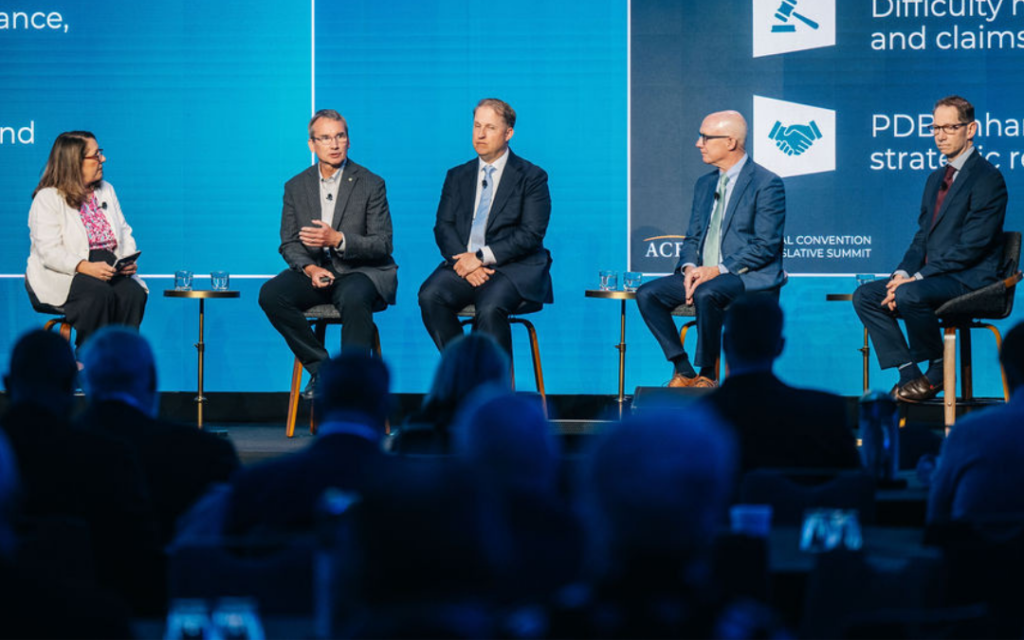
The ACEC Technology Committee hosted the convention session, “From Innovation to Implementation: Technology Leaders Roundtable,” moderated by Claire Rutkowski of WSP and featuring leaders from Esri, Microsoft, and NVIDIA.
The discussion explored various facets of digital transformation in the AEC industry, from emerging technical innovations to the critical role of people in adopting and effectively using new technologies. Naturally, artificial intelligence was also a key part of the conversation.
Panelists expressed enthusiasm about the impact new technologies will have on the industry, highlighting two key emerging focus areas: data and trust.
In connection with partnerships and data, panelists discussed the concept of hyperconnectivity. They agreed that AI is enabling easier integration of previously disconnected data sources, significantly reducing a technical challenge that has persisted for decades.
When asked what ACEC member firms are expecting from these technology vendors, panelists noted that easier collaboration on data across platforms is driving their own product development.
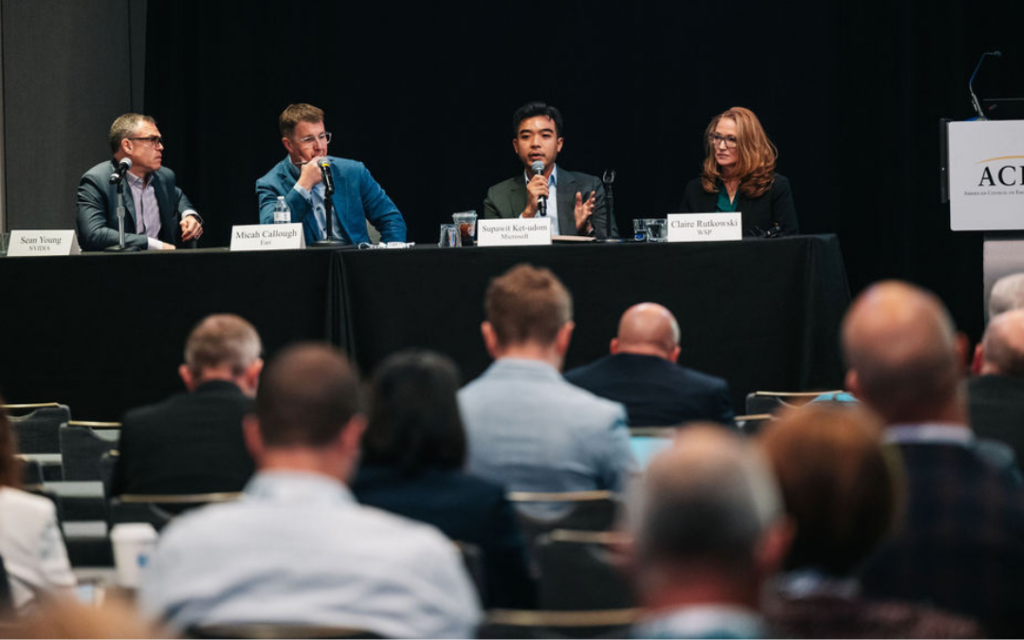
Highlighting this was the discussion of partnerships and it was noted how all the companies on the panel’s products are interconnected with Esri platforms running on Microsoft cloud computing powered by NVIDIA processing chips.
This parallel can be applied to AEC firms working together across the project lifecycle, where multiple organizations are involved in the design and delivery of infrastructure projects for clients.
It was observed that within member firms, adoption of new technologies becomes challenging when executives lack trust in them, making it difficult to drive organization-wide uptake. Panelists also emphasized the importance of involving legal and compliance experts from your firm during AI adoption. This supports the concept of keeping a “human in the loop,” ensuring that any AI-generated output is reviewed and validated by a person.
Market Intelligence and Energy Committees Convene Joint Session at ACEC
The Market Intelligence Committee and the Energy Committee convened during ACEC’s Annual Convention, for a meeting characterized by an increased level of collaboration. The session marked the first joint meeting between the two committees—an important milestone in advancing strategic priorities to enhance member engagement and strengthen cross-committee alignment.
The meeting began with a leadership transition. Mark Baum, chief commercial officer of BW Design Group, concluded his term as chair. Rob Brigham, CEO of JEO Consulting Group, Inc., who previously served as vice chair, assumed the chair role, and Anabel Sanford, business development manager at Emmons & Olivier Resources, Inc. (EOR), joined as vice chair for the 2026–2027 term.
The joint Market Intel Exchange focused on the rapidly evolving data center market, bringing together leaders from development, energy, and infrastructure. The discussion highlighted the pace of demand growth, driven by AI and cloud expansion, and the ripple effects across supply chains, utilities, and local communities. Panelists pointed to several key challenges shaping the sector. Equipment procurement timelines remain extended due to manufacturing constraints and tariff impacts. At the same time, community perception has become a growing barrier, with opposition often rooted in outdated assumptions about energy and water use, even as modern facilities grow more efficient and contribute significant tax revenue to local economies.
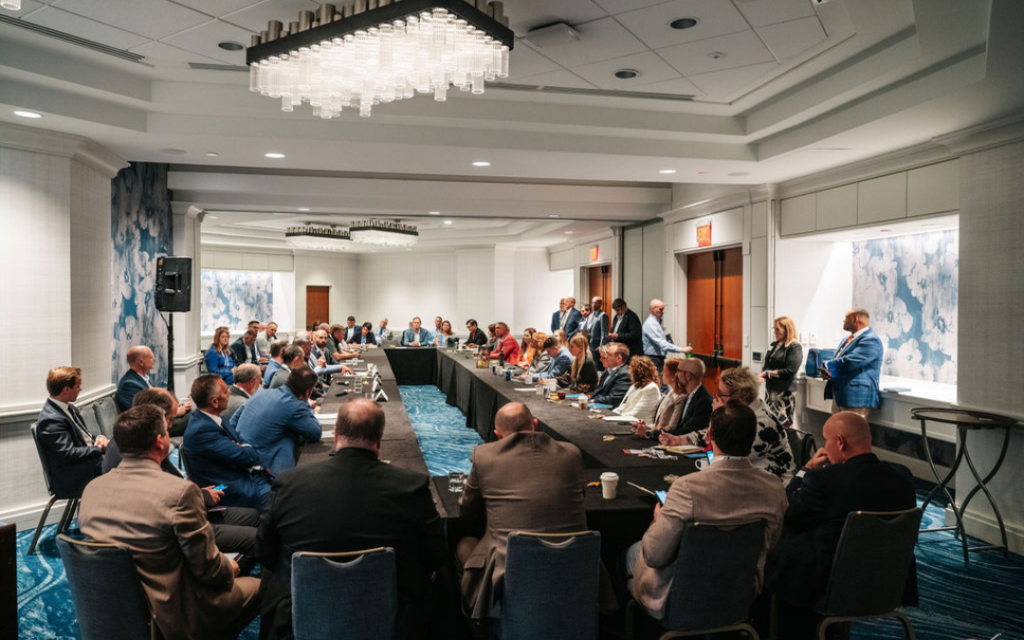
Energy and infrastructure realities were also central to the discussion. Developers and utilities alike are navigating long lead times for generation and grid expansion while balancing tradeoffs between power and water use. With regulation largely occurring at the local level, early and sustained community engagement is proving critical to project success.
Looking ahead, the committee will build on this momentum with upcoming exchanges on water and manufacturing, as well as a full lineup of Market Edge Podcast topics spanning ports, resilience, water resources, and real estate.
The joint meeting set the tone for a more connected, collaborative approach, one that will continue to deliver timely insights and greater value for our members.
ACEC/PAC Annual Convention Sweepstakes Winners
The winners of this year’s PAC Spring Sweepstakes: Sandra Bucklew, HNTB, Jacksonville, FL, won the $10,000 Grand Prize. Stephanie Wagner, Wagner Engineering and Survey, Northridge, CA, won the $7,500 prize. Toby Randolph, Parsons, Indianapolis, IN; Michelle Gottschalk, CDM Smith, Indianapolis, IN; and Ian Engstrom, Smith Seckman Reid, Mephis, TN, each won $5,000. Ryan Schanhofer, KL Engineering, Inc., Madison, WI; Thomas Crochet, VHB, Atlanta, GA; and Stacy Loeffler, BKL, Inc., Tulsa, OK, each won $2,500.
The following 10 individuals each won a $1,000: Veronica Matson, Kimley-Horn, Orange, CA; Jeffrey Cowen, Building & Earth Sciences, Birmingham, AL; Rodney Chester, Gresham Smith, Nashville, TN; Jason Webber, Kimley-Horn, Delray Beach, FL; Ann Williams, HDR, Omaha, NE; Gregg Jorgenson, Banner Associates, Inc., Brookings, SD; Bill Forsmark, Barr Engineering Co., Minneapolis, MN; Charles McCallum, Kier & Wright, Livermore, CA; Brian Arman, AET, Saint Paul, MN; and Rick Willis, American Structurepoint, Indianapolis, IN.
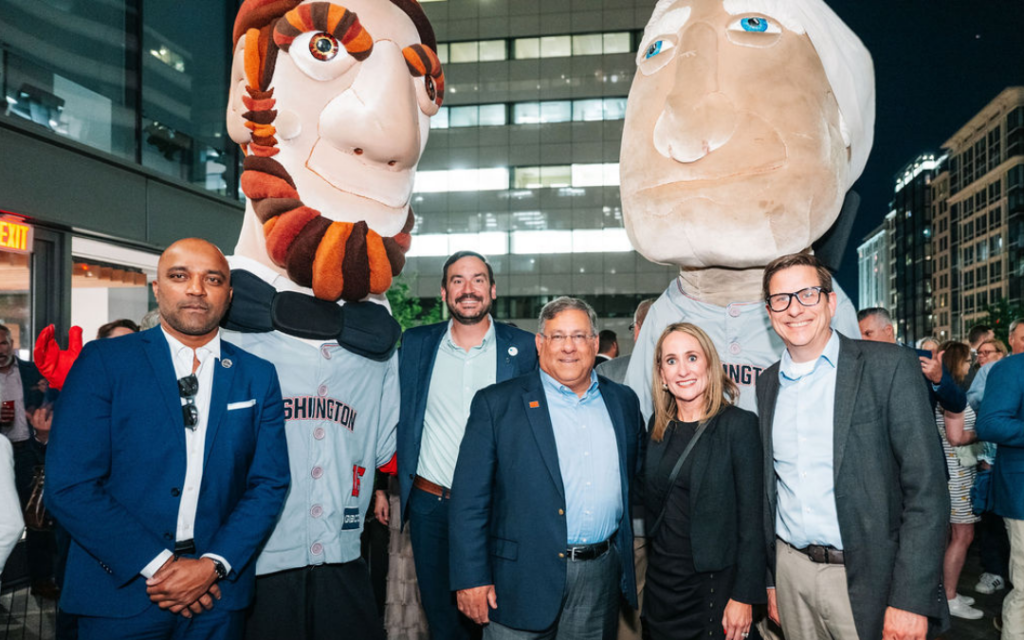
more convention moments: