
Three things that the most recent Transportation and Infrastructure Committee chairs agree on, and what it means for surface reauthorization

The surface transportation reauthorization debate is heating up in Congress. We sat down with two former committee chairs to get insights into the fundamentals: what do the people who’ve actually built and passed these bills believe about how infrastructure gets funded, who decides where money goes, and what it takes to hold a coalition together?
We put that question directly to Bill Shuster and Peter DeFazio on the Engineering Influence podcast. Shuster chaired the House Transportation and Infrastructure Committee from 2013 to 2019. DeFazio took the gavel in 2019 and stewarded the legislation that became the Infrastructure Investment and Jobs Act. Between them, they represent the Republican and Democratic approaches to infrastructure over roughly a decade of committee leadership. They sat down together at ACEC’s 2026 Convention to talk candidly about what they’ve learned.
We recorded that conversation before the House T&I Committee marked up and approved the BUILD America 250 Act, a $580 billion, five-year surface transportation reauthorization bill that cleared committee on May 22 by a remarkable 62–2 vote. What Shuster and DeFazio said in anticipation of that moment holds up well now that it’s happened. The harder work is still ahead.
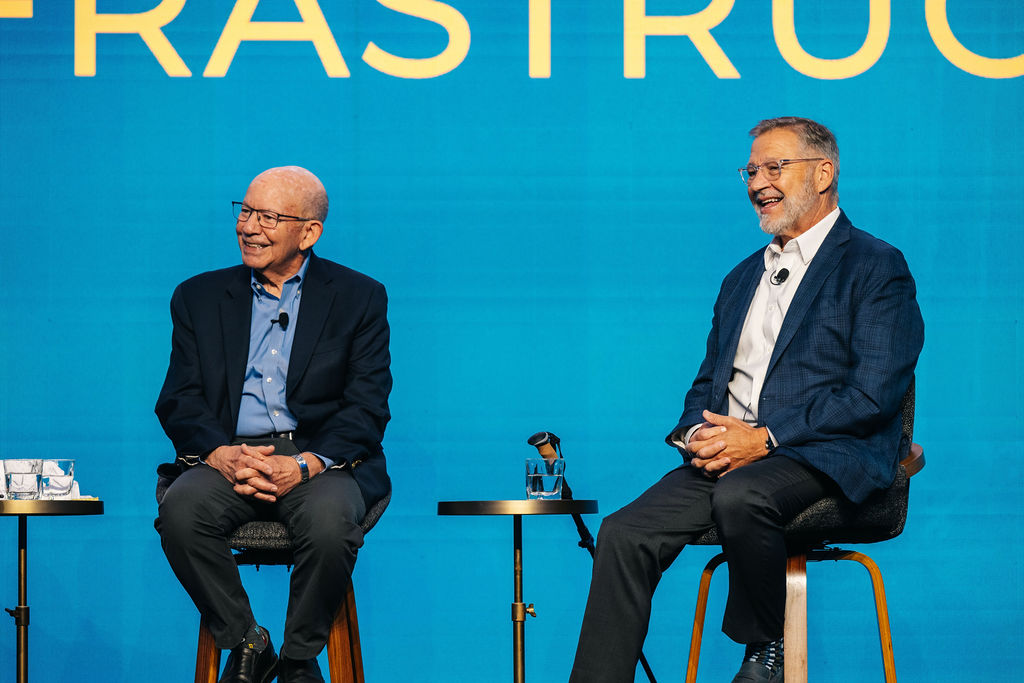
Three things stood out. They’re worth understanding regardless of where you think the current reauthorization ends up.
1. A mileage-based user fee is the only honest long-term revenue solution
The highway trust fund has a structural problem. Gas tax revenue is not keeping pace as vehicles become more fuel-efficient and electric adoption grows. The gap between incoming revenues and projected spending is roughly $37 billion, and it doesn’t close itself.
Ask most policy observers what to do about it and you get a menu: raise the gas tax, allow more tolling, lean on public-private partnerships, or charge vehicles based on weight. Shuster and DeFazio work through the same list and land in the same place: vehicle miles traveled is the only mechanism that actually scales with road use rather than fuel consumption.
That’s not a new position for either of them. What’s changed is the political environment around it.
For years, VMT was effectively blocked by a privacy objection: people didn’t want the government tracking their movements. Shuster describes how that argument has shifted. When he was chairman and raised the idea of VMT with his son who was then just out of college, his son put an iPhone on the table. “They know exactly where I am, where I’m going, where I’ve been,” he said. The privacy trade-off that once seemed unacceptable to voters has been quietly accepted as the price of the devices everyone already carries.
Neither Shuster nor DeFazio suggests VMT will be easy to enact. But they both treat the privacy objection as functionally resolved, with the political will to act as the remaining variable. The BUILD America 250 Act addresses the trust fund gap in part through new EV and plug-in hybrid registration fees, a meaningful step but not the structural fix both former chairs argue is ultimately necessary.
2. Earmarks are not the problem. They’re often the solution.
“Earmarks” is a word that still triggers reflexive opposition in some circles. The argument against them is familiar: they’re pork, they’re inefficient, they bypass merit-based allocation, they corrupt the legislative process.
DeFazio makes a different argument. The question isn’t whether earmarks are philosophically pure. The question is who decides where transportation money goes if members of Congress don’t.
The answer, DeFazio points out, is that without involvement by their directly elected representatives, Americans’ tax dollars are spent by unelected bureaucrats in Washington that have very little to no understanding of local needs.
Shuster adds the practical dimension: in states like Pennsylvania, where Philadelphia and Pittsburgh dominate state-level politics, rural members without earmarks are left scrambling for dollars that never materialize. Earmarks restore a measure of geographic equity and ensure that members of Congress have skin in the game.
3. Bipartisan doesn’t mean frictionless
The IIJA is generally described as a bipartisan success. That’s accurate, but it flattens a story that’s considerably more complicated.
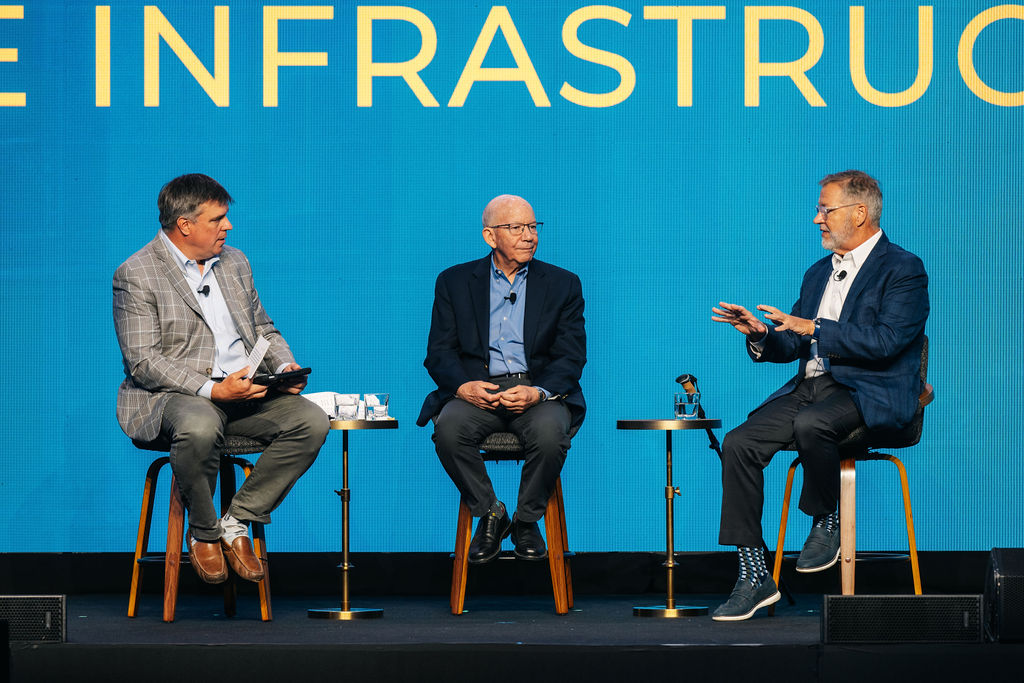
DeFazio built climate provisions into his bill, provisions he believed were substantively necessary, given that the transportation sector is the single largest contributor to carbon pollution in the United States. Those provisions cost him Republican votes. By the time the bill reached the floor, he was short of where he needed to be and facing opposition from his left as well, resulting in members who wanted more and voted no.
A handful of Republicans crossed over. The bill passed.
“If I hadn’t had those Republicans,” DeFazio says, “it wouldn’t have passed.”
That’s a different account than the one that usually circulates. It’s also more instructive. Bipartisan infrastructure legislation isn’t the product of everyone agreeing. It’s the product of enough people, from enough different places, finding sufficient reason to vote yes. And the members who provide the margin often don’t share the same rationale for why they’re voting the way they are.
The 62–2 committee vote on the BUILD America 250 Act suggests Graves and Larson have built a sizeable and diverse coalition. Whether that holds on the Floor is a different question.
For anyone working to advance infrastructure investment in the current environment, that’s the operative lesson. The goal isn’t unanimity. It’s a workable majority, assembled piece by piece.
Where things stand now
When Shuster and DeFazio sat down with us in late May, committee action was rumored but unconfirmed. That committee vote has now happened, and the 62–2 margin was, by any measure, a genuine bipartisan achievement. Sam Graves and Rick Larson deserve credit for the months of negotiation that produced it.
But clearing committee is the beginning of the process, not the end of it. The remaining House committees of jurisdiction, including Energy and Commerce, which approved its title on May 21, still need to combine their texts before the bill can reach the full House. The Senate has not yet released companion legislation. And with the current surface transportation law expiring September 30, 2026, a near-term extension is likely if bicameral negotiations extend into the fall.
Leadership floor time, the variable Shuster identified before markup, remains the variable now. With a thin majority and a midterm approaching, leadership will move the bill when the votes are confirmed, not before.
That dynamic puts the engineering and infrastructure community in a familiar position: making the case not just for good policy, but for the political imperative of acting. Projects that create jobs, reduce commute times, improve freight movement, and drive regional economic activity are the tangible argument for yes votes. The more specific that case is, district by district and project by project, the more useful it is to the members who need a reason.
That has always been the work. It remains the work now.
This conversation was recorded at ACEC’s 2026 Convention & Legislative Summit, prior to the House T&I Committee markup of the BUILD America 250 Act. The full episode with Bill Shuster and Peter DeFazio is available on Engineering Influence, the podcast of ACEC. Listen wherever you get podcasts.


