
VHB’s Reggie Scales on the Quiet Work of Building for Others

Ed. Note: Sometimes, the best stories find you. This one was a February news story from the Sanford (NC) Herald about a Black History Month presentation at a church focused on faith, leadership, and what it means to build things that last. The speaker: VHB Raleigh Managing Director Reggie Scales. We reached out to Mr. Scales to learn more. Here’s what we found.
The thing that best explains Reggie Scales’ life trajectory is a farm in rural North Carolina.
Even beyond the engineering degree, the years in city government, or the senior leadership position at VHB. The farm. Because on a farm, you learn early what matters. “It’s about roads that get you where you need to go, water that runs clean, bridges that stay open, and systems that work when the weather turns,” said Scales.
Nobody on the farm was talking about infrastructure. But that’s what it was, and the little boy who grew up there was paying close attention.
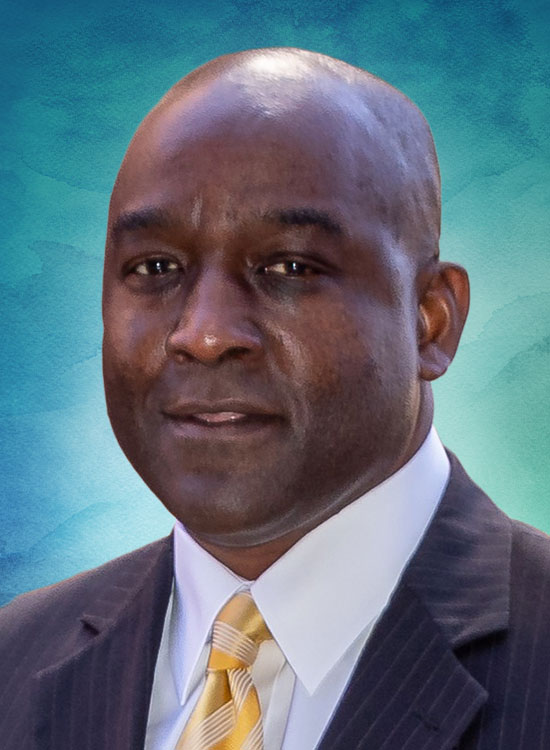
You build for people you may never meet, and you do it with excellence because the public is relying on it.
managing director
vhb raleigh
Scales didn’t wake up one morning and decide to become an engineer. It doesn’t always work that way. Sometimes, a calling finds you gradually. It comes from the quiet recognition that the thing you’re good at and the thing the world needs might be the same thing. For Scales, that thing sat right at the intersection of problem solving and public service. The work drew him in. The impact kept him.
His first real education came in city government. As a planner, Scales learned something they don’t teach in any classroom: infrastructure is personal. “You’re accountable to residents, elected officials, and departments with competing priorities,” he said. “You learn quickly that the ‘right’ solution has to work in the real world.”
From that early experience came three lessons that Scales says he still relies on in the private sector. Start with the people and the purpose. Build alignment before you build anything else. And deliver what you said you would. No surprises, no excuses, every time. Scales knows what keeps agency leaders awake at night because he used to be one of them.
Bigger Tent, Better Outcomes
Scales will tell you, plainly and without hesitation, that diversity is not a “nice to have.” It’s a performance advantage. He has watched what happens when teams all look the same, think the same, and come from the same place. They miss things. They miss who a project doesn’t serve. They miss what safety looks like for someone whose relationship with the world is different. They miss what access means at midnight in a community they’ve never visited.
Outside of work, Scales has poured himself into Rotary and, of course, into ACEC. He describes both as steps in the ladder of his success. “ACEC has given me a broader view of the engineering profession—policy, advocacy, business ethics, and how our industry can lead,” he said. Beyond that, something less tangible, yet every bit as valuable: an opportunity to forge relationships built on trust rather than transactions.
Acts of Faith
We asked Scales about his presentation for Black History Month—the one reported in the Sanford Herald writeup that first caught our attention here at ACEC National. Under the theme “We’ve Come This Far By Faith,” he focused his remarks on “bridge builders,” including and beyond Dr. Martin Luther King: well-known and lesser-known leaders whose faith and courage produced lasting impact. “That message mirrors how I approach infrastructure,” Scales said. “You build for people you may never meet, and you do it with excellence because the public is relying on it.”
Faith, he says, keeps him grounded about two things: do the right thing when it would be easier not to; and build for the whole community—not just the loudest voices in the room.
Lessons in Leadership
Scales says his approach to mentorship is a mix of clarity and encouragement. “Early professionals need two things at the same time: high standards and real support,” he said. What does that mean in practical terms? It’s about meaningful work, honest feedback, and a window into how to think, not just what to do.
No conversation with a senior leader of an engineering firm would be complete without mentioning our industry’s workforce shortage. We asked Scales what he would say to an engineer thinking of leaving the profession. His response: “Before you walk away, ask whether you’re tired of engineering, or tired of your current environment.” Engineering has more roads than people realize, he said. Sometimes you don’t need a new career. You just need a new mission.
A Life Well-Built
Scales says he measures a project the way he measures a life—not just by whether it “meets the spec,” but by whether it made things better for someone. Whether it will still be doing that a half century from now.
“The projects I am proudest of are the ones that become part of a community’s story.”