Aging Demographics Fuel Senior Living Growth and Medical Office Expansion

Over the next 10 years, the U.S. population aged 85 and older is projected to nearly double from 6.5 million to 11.8 million, making it the nation’s fastest‑growing age segment (U.S. Census; The Center for Health Design). Approximately 10,000 baby boomers turn 65 each day; by 2030, all 73 million boomers will have hit that milestone birthday, further accelerating the nation’s shift toward an older population (AARP & U.S. Census Bureau).
Longer life spans are also contributing to the shift. The United States death rate fell roughly 24% from 1999 to 2019, prior to the COVID-19 pandemic, and life expectancy reached an all-time high of 79 years in 2024 (CDC). Americans are living longer, and that demographic shift is driving demand across multiple health care market sectors: senior housing, nursing homes, acute‑care facilities, hospices, outpatient centers, and adult day programs. Hospice demand alone is expected to rise by 9% annually through 2029 (McKinsey).
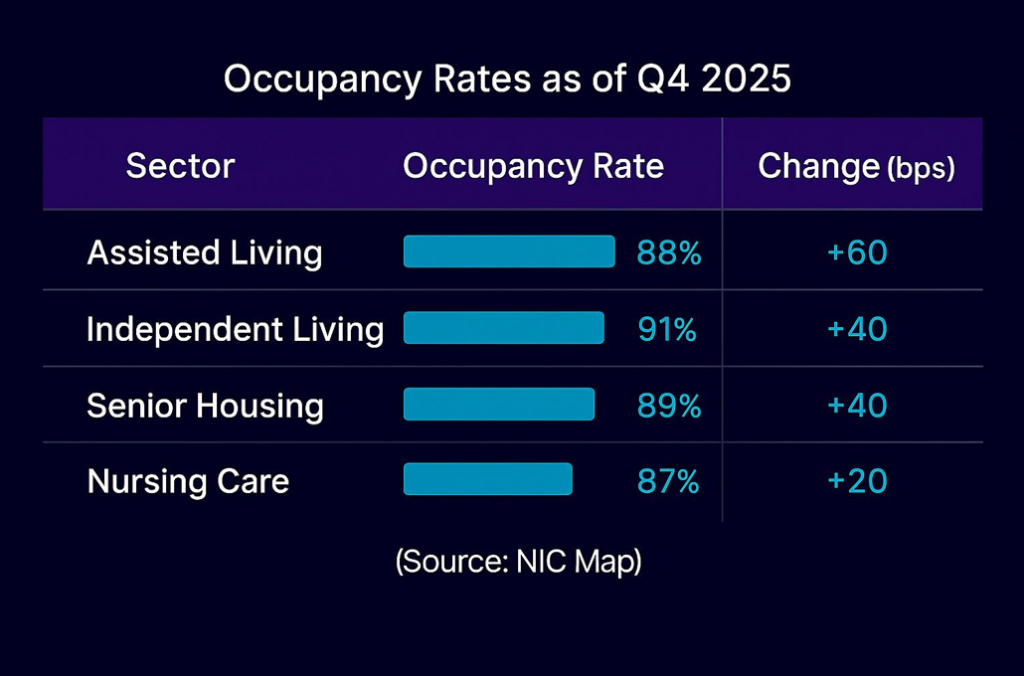
This demographic acceleration is translating directly into market pressure. As the population ages, demand for senior housing and care facilities is rising faster than new supply can be delivered. The senior housing market is already facing development delays driven by higher-for-longer interest rates and policy uncertainty. The market is facing historically low supply and elevated occupancy rates between 87 and 91 percent, up 20 to 60 basis points from the prior quarter. See chart below for occupancy rates and basis point changes as of Q4 2025 from the National Investment Center for Seniors Housing & Care (NIC). Market conditions, combined with the demographic pressures, suggest sustained demand for senior apartments, independent living, assisted living, memory care, nursing homes, and Continuing Care Retirement Communities (CCRCs).
For engineering firms, these pressures could translate into expanding project pipelines. Roughly 39% of ACEC member firms serve health care and residential markets; sectors now central to meeting the needs of an aging population. Health care design and construction spending reached $69 billion in December 2025, just over 3% of total U.S. spending, and includes hospitals, medical buildings, and specialized facilities such as nursing homes and hospices. Private residential spending was far larger at $916 billion, including non‑nursing senior housing such as assisted living, independent living, and senior apartments. Together, private residential and health care projects accounted for about 45% of all design and construction spending in December 2025 (U.S. Census Bureau). The sector’s growth trajectory underscores the importance of engineering services in planning and delivering the capacity expansion needed over the next decade. Mechanical, electrical, plumbing (MEP), structural, and civil engineers remain central to designing the next generation of health care facilities.
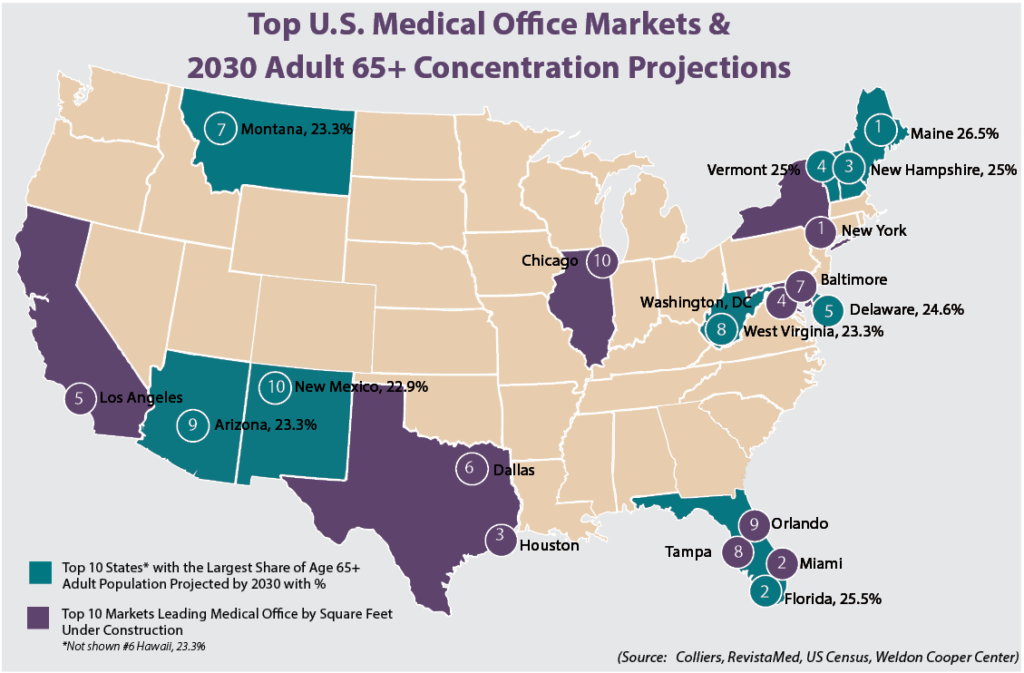
Beyond residential and acute‑care settings, demand is also accelerating across medical office buildings (MOBs), specialty care sites, pharmacies, and mobility‑focused infrastructure. The aging population is driving demand for MOBs, including specialized and accessible healthcare options. MOBs provide care for chronic conditions including arthritis, diabetes, and dementia in an outpatient setting. They also provide routine care including physicals, dental cleanings, and diagnostic imaging. The map below highlights the top 10 states projected to have the largest share of adults aged 65+ by 2030. It also identifies the top 10 markets leading in the medical office sector by square feet under construction. New York leads the way at 1.7 million SF under construction in 2024, followed by Miami, Houston, Washington, DC, and Los Angeles. Florida shows the greatest overlap between high concentrations of older adults and medical office development, indicating regional growth areas within the sector.